Defender · CS-820 · Removable Robot Operator — Field Engineering

NOBODY IN THE SEAT.
THE MACHINE STAYS STANDARD.

A self-contained unit that sits in a machine's own seat and drives its own joysticks, levers, pedals and switches — never touching the CAN bus, ECU or firmware.

Seat-Mounted Retrofit · Human-Authorized · No Radio, No GNSS

13
Actuator modules in the SE family
7
Authority modes, OFF through MAINTENANCE
5
Mechanical states, OEM through FAULT/SAFE
0
Radios or GNSS receivers, any tier
What It Is

A Removable Operator.
Not a New Machine.


Defender CS-820 is a self-contained unit that sits in the operator's seat of a machine a unit already owns — excavator, dozer, loader, grader, tractor — and works that machine's own joysticks, levers, pedals and switches with its own actuators. It never touches the machine's CAN bus, ECU or firmware. The only wire between them is a fused feed from the accessory point, and when the job is done the unit lifts out and the machine is standard again.

A camera reads the dashboard the way an operator would; the actuators move the same levers, wheel and pedals an operator would move. Nothing about the host machine is cut, wired or reprogrammed to accept it — the dock is the machine's own seat-belt anchors and pins, and the cradle rests on the OEM seat pan with the machine's own lap belt threaded through a closed tunnel between the cradle rails. Status: IFC — In Test.

The seat is the most exposed place on a work site under threat, and Defender's purpose is to take the person out of it. It is the field-engineering profile of the new CS-8xx band — earthworks, berms and revetments, obstacle reduction, route and rubble clearance, and remote handling on ground where a person should not sit. Its sister platform, Responder CS-810, carries a different profile on the same seat-mounted architecture.

The Logistics Argument
No new vehicle. Just the machines you already have.

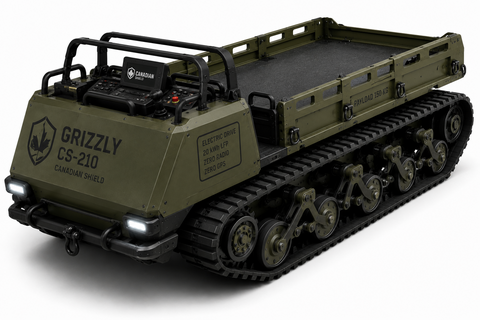
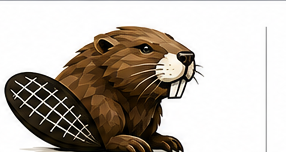
Ground's Grizzly and Beaver are new vehicles, purpose-built from the frame up. Defender is the opposite kind of asset: no new vehicle to ship, park, fuel or train on. The capability travels as a case and a fit kit, to machines already in theatre or already on the yard.

  • Never touches the CAN bus — no connection to the host machine's CAN bus, ECU or firmware, ever.
  • Lifts out, machine stays standard — remove the unit and the seat, joysticks and pedals are exactly what they were.
  • Never a weapon platform — field engineering, mechanical scope only. Defender never operates a weapon, never handles energetics, and is never fitted to a weapon platform.
01 How It Works · The Seat Becomes the Interface

DOCK, READ, COUPLE, CALIBRATE


Four things happen at once, and none of them is electrical to the host machine itself. The unit docks to the seat-belt anchors; a camera reads the dashboard the way an eye would; actuators couple to the joysticks, levers, pedals and switches already there; and a fused feed from the accessory point is the only wire that ever crosses into the machine.

Every day it works, Defender walks each coupled control through a short routine before the first task: finding where neutral sits, where the limits are, and how the control returns when released. Controls wear and no two machines are alike, so that routine runs fresh every session rather than being trusted from the day before.

What runs afterward depends on the guidance tier selected for the task. Tier 1, Preset, loads the task program at the dock and then emits or receives nothing while it runs. Tier 2, fibre-tethered, puts a human at a stand-off station over an optical link that is unjammable by construction — a human authorizes every decision that matters. Tier 3, Optical-AI, plans and perceives onboard, inside a sealed rule set, with no emissions, no link and no GPS anywhere on the line. Authority itself steps through seven modes, from OFF to AUTONOMOUS, with MAINTENANCE held apart from the working chain — and the unit's own mechanical state, from OEM to FAULT/SAFE, is tracked independently of whichever authority mode is selected.

INSTALL & CALIBRATE HOST MACHINE CAB — SECTION VIEW NO CAN · NO ECU · NO HOST FIRMWARE LINK CAMERA READS THE DASH ACTUATOR COUPLERS — JOYSTICKS & PEDAL OPTICAL FIBRE TETHER · TIER 2 NO RADIO · NO GNSS CS-820 · seat-mounted install — no CAN, no ECU, no host firmware touched. Illustrative scene — not a deployment record.
Full Specification Sheet

Every Number, Grouped for the Walk-Around.


The complete data card for Defender — interface and fit, drive and control, authority and states, security and authorization, and the standards named at design, grouped the way a fleet buyer compares them.

Defender CS-820 · Removable Robot Operator — Field Engineering New CS-8xx Band · Field-Engineering Profile

01Interface & Fit

Dock
The machine's own seat-belt anchors and pins — the dock stays with the machine
Mounting
Body sits on the operator's seat in a cradle resting on the OEM seat pan
Restraint routing
The machine's own lap belt threads through a closed tunnel between the cradle rails
Removal
Lifts out; the machine returns to standard, unmodified condition
Host machines
Excavator, dozer, loader, grader, tractor — the unit's own machines only

02Drive & Control

Actuator family
13 modules — SE-HAND, SE-TILLER, SE-WHEEL, SE-PEDAL, SE-PEDAL-HI, SE-GATE, SE-ROTARY, SE-SWITCH, SE-SWITCH-MATRIX, SE-AUX, SE-SENSE, SE-DOCK, SE-CORE
Steering
Driven from the centre of the machine's own steering wheel via a machine-specific adapter plate
Dash reading
Camera reads the machine's own dashboard
Host machine link
None — never connects to the host machine's CAN bus, ECU or firmware; the only wire crossing in is a fused feed from the accessory point
Electrical
24 VDC family-wide; 12 V machines get conversion in the fit kit
Comms
CAN 2.0 / Ethernet, wired only — wireless never carries the safety loop or motion commands
Calibration
Every control worked through neutral, limits and return-to-release each day it works — controls wear and no two machines are alike

03Authority & States

Authority modes
7 — OFF · MANUAL · ASSIST · APPROACH · TELEOP · AUTONOMOUS · MAINTENANCE
Mechanical states
5 — 0 OEM · 1 INSTALLED/DISENGAGED · 2 ARMED · 3 AUTONOMOUS CONTROL · 4 FAULT/SAFE
Guidance tiers
Tier 1 Preset (loaded at the dock, nothing emitted or received while it runs) · Tier 2 Fibre-tethered, human-in-loop · Tier 3 Optical-AI, onboard and sealed
Task-defined safe state
Each task carries its own — withdraw along the tether, ground the implement and hold, or complete to a defined stop line — designed per task, not chosen in the moment
Key rotation
Excluded from the actuator set — keys are human authority tokens

04Security & Authorization

Rule sets & firmware
Signed; a hardware root of trust runs nothing unsigned
Debug access
None on shipped units
Tamper detection
Ends in a safe stop and a retained log
Key custody
Held in Canada
Authorization model
A lease, issued and withdrawable by Canadian Shield, delivered by wire or at the dock, never by radio
Withdrawal / expiry
Safe stop, then the minimum-risk condition; the unit stays installed and will not run until re-authorized — the host machine is never touched
Physical stop
The physical stop and the RED MANUAL RELEASE on every actuator always remain — the lock is on the logic, never on safety
Ownership
Customer owns the machine and the hardware; the configuration and application are Canadian Shield's, licensed and revocable

05Standards & Compliance

Design standards
ISO 12100 · ISO 13849 · ISO 17757 · ISO 19014 — designed to; no assessment performed
Patent status
Patent pending
Export control
Export-controlled — international transfer subject to Canadian government permits; export posture is counsel-first
Scope
Field engineering, mechanical scope only — never operates a weapon, never handles energetics, never fitted to a weapon platform; weaponization is not a product decision

Design standards are named at design; no assessment has been performed against any of them. Authorization is a lease, not a sale — issued and withdrawable by Canadian Shield, delivered by wire or at the dock, never by radio.

In the Doctrine

Stopping Is Not Always Safe.
So Safety Is Designed Per Task.


Most safety doctrine ends the same way: leave the rules, reach a minimum-risk condition, call a human. For a system working under threat, that is not always true — stopping in the open and waiting can itself put a person in harm's way. Defender's rule set does not treat “stop” as one answer for every task.

Each task in the Defender rule set carries its own defined safe state, designed in advance rather than chosen in the moment: withdraw along the tether, ground the implement and hold, or complete to a defined stop line. Which one applies is set by the task, not improvised after the fact — because the moment authority is withdrawn or a limit is crossed is exactly the wrong moment to be deciding what “safe” means for the first time.

The rules themselves ship sealed — signed rule sets and firmware, a hardware root of trust that runs nothing unsigned, no debug access on any shipped unit, and tamper detection that ends in a safe stop and a retained log, with keys held in Canada. None of that is claimed to make tampering impossible; it is built to make it expensive, slow, obvious and self-defeating. Authorization itself is a lease, not a sale — issued and withdrawable by Canadian Shield, delivered by wire or at the dock, never by radio, and a unit that leaves its authorized hands simply stops being useful. The physical stop and the RED MANUAL RELEASE on every actuator are never part of that lease: the lock is on the logic, and it is never on safety.

Ownership follows the same split as authorization: the customer owns the machine and the hardware; the configuration and application that turn it into Defender are Canadian Shield's, licensed and revocable.

The Doctrine Line
AI plans. Rules govern.
Humans authorize. Safety has veto.

Four short sentences carry the whole architecture: what the rule set is allowed to plan, that the rules — not the moment — govern what happens next, that a human authorizes anything that matters, and that safety can always veto, no matter which authority mode is selected.

Deployment

An Install, Walked Through.


One install and one task, walked end to end — illustrative of how the unit is used, not a deployment record.

01 · Install

Onto the Machine's Own Anchors

The unit docks to the machine's own seat-belt anchors and pins — the same pins that held the belt before Defender arrived. The cradle rests on the OEM seat pan, the lap belt threads through a closed tunnel between the cradle rails, the camera is aimed at the dashboard, and actuators couple to the joysticks, levers, pedals and switches already there. One fused feed from the accessory point is the only wire that crosses into the machine; the CAN bus, ECU and firmware are never touched.

02 · Calibrate & Authorize

Every Control, Relearned, Every Day

Before the first task of the day, Defender walks every coupled control through its own routine — finding neutral, finding the limits, learning how each one returns when released. Controls wear and no two machines are alike, so nothing is trusted from the day before. Authorization arrives as a lease from Canadian Shield, delivered by wire or at the dock, never by radio, and the guidance tier — Preset, fibre-tethered, or Optical-AI — is set for the task at hand.

03 · Work & Withdraw

A Defined Safe State, Not a Guess

The task runs inside its sealed rule set until it is done, until authorization is withdrawn, or until a limit is crossed. Either way, Defender reaches the safe state that task was designed with — withdraw along the tether, ground the implement and hold, or complete to the stop line — and if it stays there, drops to the minimum-risk condition. The physical stop and the RED MANUAL RELEASE on every actuator are never part of that logic. When the job is done, the unit lifts out and the machine is standard again.

The CS-8xx Band · At a Glance

Same Seat. Different Machines.


Defender anchors the field-engineering profile of the new CS-8xx band — a removable operator that turns a machine already on the yard into an uncrewed one. Its sister carries a different profile on the same seat-mounted architecture. Neither is a new vehicle; both are ways of not sitting in one.

This platform CS-820 · Field Engineering

Defender

Turns a machine you already own into an uncrewed one — nothing cut, wired or reprogrammed on the host.

CS-810 · CS-8xx Band

Responder

The sister platform on the same seat-mounted architecture — brochure to follow.

Grizzly CS-210 · Lead vehicle

Grizzly

Tracked. Battery-electric. 150 kg over muskeg — with nothing to jam. A new vehicle, not a retrofit.

Download PDF
Beaver CS-250 · Field engineer

Beaver

Tracked. Battery-electric. An anchored winch pulls roughly seven times what the tracks alone can — a field-engineering vehicle of its own.

Download PDF
Wolverine CS-260 · Access tool carrier

Wolverine

A compact tracked carrier that places self-reacting tools at the work face — the force closes on the structure, not the machine.

Download PDF
Nobody in the Seat

The Seat Is the Exposed Part.
Defender Takes It.

If you operate machines on ground where the seat is the most exposed place on site, the conversation starts with which machines you already have, and which of them Defender can turn uncrewed without cutting a single wire into the host.

Full Marketing Package

The Rest of the Fleet.


Every Canadian Shield platform has a brochure like this one — same depth, same status discipline, same refusal to publish a number we cannot source. Organized by family below, or browse the full library.

Air · 8
CS-110 · Air

Goose

No battery. No motor. No receiver. A kinetic carrier launched at ~189 m/s on shop air.

Read the brochure Download PDF
CS-111 · Air

Encapsulator

A capture-head variant on the Goose CS-110 launch line — fouls rotors and entangles the airframe instead of striking it down.

Read the brochure Download PDF
CS-112 · Air

Matrix

Aimed, direct-fire, tethered — the net that stays connected to the gun that threw it.

Read the brochure Download PDF
CS-120 · Air

Gyrfalcon

Goose's launch chain, plus the power Goose leaves out — a tail motor and bow-thruster ring for mid-flight correction.

Read the brochure Download PDF
CS-130 · Air

Raven

A moulded electric aircraft that carries the network — decoy, relay, electronic support. Non-kinetic. Recoverable.

Read the brochure Download PDF
CS-140 · Air

Owl

A big, slow propeller and an IR-biased eye — orbiting instead of hovering, unheard, unseen, unjammed.

Read the brochure Download PDF
CS-150 · Air

Loon

The bird that flies its whole leg without asking a satellite for a name.

Read the brochure Download PDF
CS-160 · Air

Kestrel

The Air family's smallest body — a tube-launched, motor-cruising scout priced to lose, not to last.

Read the brochure Download PDF
Ground · 6
CS-210 · Ground

Grizzly

Tracked. Battery-electric. 150 kg over muskeg — with nothing to jam.

Read the brochure Download PDF
CS-220 · Ground

Moose

600 kg of freight over bad ground. Payload is the product — mobility is the constraint it is bought within.

Read the brochure Download PDF
CS-230 · Ground

Wolf

Eight coordinated carriers. One fibre trunk. One operator. Nothing to jam.

Read the brochure Download PDF
CS-240 · Ground

Lynx

A wheeled route-picker with thermal eyes — and a watch mode measured in days.

Read the brochure Download PDF
CS-250 · Ground

Beaver

Tracked. Battery-electric. An anchored winch pulls roughly seven times what the tracks alone can.

Read the brochure Download PDF
CS-260 · Ground

Wolverine

A compact tracked carrier that places self-reacting tools at the work face — the force closes on the structure, not the machine.

Read the brochure Download PDF
Water · 2
CS-310 · Water

Orca

Persistent survey & carrier AUV — one moulded hull that surveys, carries and watches.

Read the brochure Download PDF
CS-320 · Water

Jellyfish

A soft pulsed-jet payload carrier — slower than the current on purpose.

Read the brochure Download PDF
Underground · 8
CS-410 · Underground

Badger

A surface plant that pushes a steerable head into ground with no line, no map, no signal.

Read the brochure Download PDF
CS-411 · Underground

Aquifer

Coiled-tubing bore, fibre-guided — conduit installed, water table mapped, nothing to jam.

Read the brochure Download PDF
CS-425 · Underground

Ferret

Recon, mapping and locating in existing tunnels and culverts — with a block-only interpose capability, always human-confirmed.

Read the brochure Download PDF
CS-430 · Underground

Mole

A passive seismic and acoustic node on long-life battery — reporting only over a buried fibre link.

Read the brochure Download PDF
CS-435 · Underground

Trembler Line

A chain of buried Mole nodes on a fibre trunk — detect, localize, cue. Nothing radiated, nothing to jam.

Read the brochure Download PDF
CS-445 · Underground

Muskrat

Hybrid swim/crawl. Zero visibility. No diver, no radio, no GPS.

Read the brochure Download PDF
CS-450 · Underground

Gopher

It maps, it marks, it parks. Cheap enough to send in numbers.

Read the brochure Download PDF
CS-460 · Underground

Farell Pig

Flow-driven, self-propelled or tethered — it rides the line, it doesn't bore one.

Read the brochure Download PDF
Eddie · The Removable Operator · 2
CS-810 · Eddie

Responder

The removable operator for emergency services — fire, rescue, hazmat and disaster response. The machine goes in; the crew stays out.

Read the brochure Download PDF
This brochure CS-820 · Eddie

Defender

The removable operator for field engineering — earthworks, berms, obstacle reduction and route clearance, on the plant a unit already has.

Read the brochure Download PDF
Defence · Cross-Fleet · 1
CS-901 · Defence

Shield Pod

A canopy-retarded delivery pod: land on a crumple zone, right itself, open, release the carrier system.

Read the brochure Download PDF