HEAVY LIFT.
NOBODY ON BOARD.
An uncrewed coaxial hybrid rotorcraft for long-line log extraction — turn after turn, hour after hour.
Hook · Lift · Fly · Land It on the Deck
Heli-logging pulls timber off slopes no road will ever reach, and it kills more pilots per flying hour than almost anything else with wings. The Heavy-Lift Logger does the same work with nobody in the seat: an uncrewed coaxial hybrid rotorcraft that flies the long line, turn after turn, and keeps a helicopter's honest escape — autorotation — when the power stops.
An uncrewed coaxial hybrid rotorcraft for long-line log extraction — turn after turn, hour after hour.
Hook · Lift · Fly · Land It on the Deck
Long-line logging is precision external-load flying at maximum gross weight, low over broken ground, all day. It is among the most dangerous jobs in aviation — and every one of those hours currently has a person in the seat.
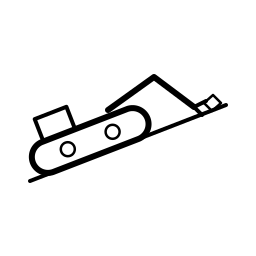
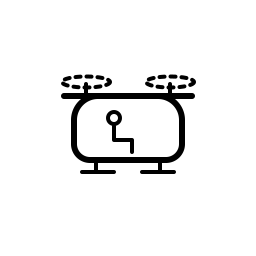
The Heavy-Lift Logger takes the person out of it. It is an uncrewed heavy-lift rotorcraft built for one cycle: hover the long line to a choked turn of logs, lift it off the slope, fly it to the landing, set it on the deck, go back. Coaxial contra-rotating rotors put all installed power into lift; a hybrid-electric powertrain gives the machine the endurance and surge power the line demands; and because it flies like a helicopter, it keeps a helicopter's escape — if power fails, it autorotates. That capability is a governing design requirement, not a footnote.
It sits in the Industrial line's Movers block — the machines above the CS-5xx work horses, sized for loads, not sensors. This is the civil side of the house: a work machine, not a weapon, flown with conventional radio command and GNSS navigation, in the open.
Unlike the defence line — which is no-radio by design — the Industrial civil line carries conventional radio C2 and GNSS, because on a cut block the enemy is gravity and terrain, not jamming. The dangerous part of heli-logging was never the navigation. It was the seat.
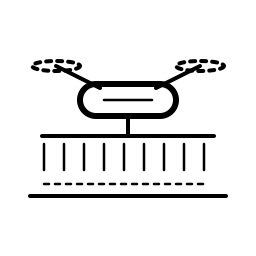
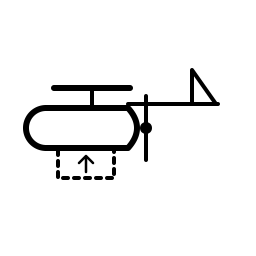
Two rotors on one mast, turning opposite ways. Their torques cancel, so no tail rotor is needed — and every installed kilowatt goes into holding the load.
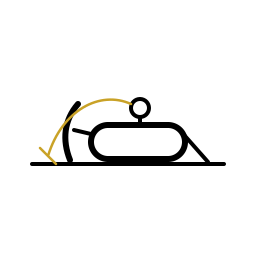
A conventional helicopter spends part of its power budget pushing sideways on its own tail just to fly straight. A coaxial machine spends that power on the hook instead, and packs its lift into a compact footprint that suits confined landings and tight blocks. The configuration was selected on the requirement that rules this design: a rotorcraft this heavy must be able to autorotate — trade rotor drive for a controlled, power-off descent — and its rotors carry the collective pitch control that capability demands. Uncrewed autorotative recovery is stated as a requirement, not a certified capability.
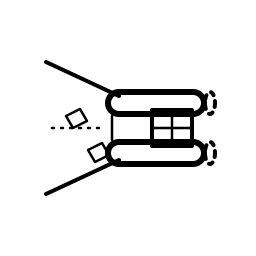
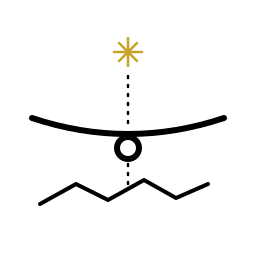
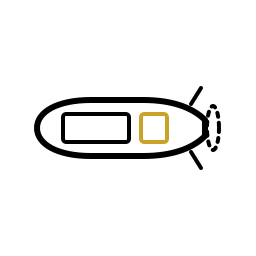
A series hybrid: a fuel-burning genset — turbine or piston — makes electricity, electric motors turn the rotors, and a buffer battery rides the bus.
Battery-only was studied and closed out for this class: at logging weights, batteries cannot carry a full working day. Liquid fuel can. The genset sizes for the steady haul; the buffer battery answers what the genset cannot — the sharp power transients a slung load puts through the rotors — and holds a protected landing reserve. Turnaround is refuelling at the dock, the way every serious work machine has always turned around: fill the tank, back on the line.
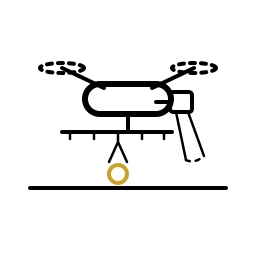
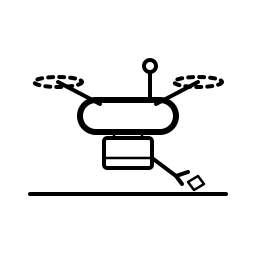
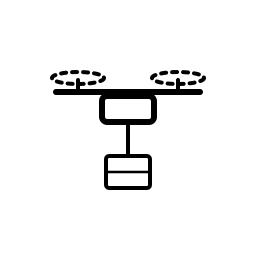
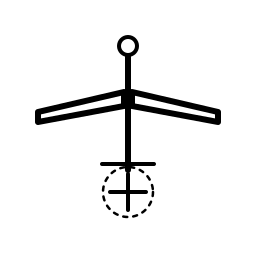
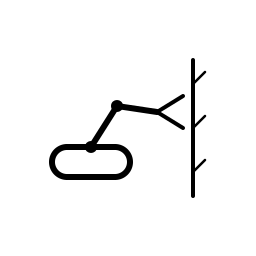
Winch, long line, remote-release hook or powered grapple, load cell, emergency jettison. One external-load interface serves choked log turns and bale tackle alike.
The line's length is a real trade, not a number picked off a shelf: fly short and rotor downwash hammers the crew and the load; fly long and the turn becomes a pendulum the flight controls must out-think. The machine measures every lift through its load cell, damps the swing, and — if a load ever endangers the aircraft — releases it. Jettison is a guarantee held by the machine, made without hesitation, because there is no pilot aboard whose judgment it must wait on. Chokers set by a ground crew or a self-loading grapple: both tackle paths are in the design, and both end at the same hook.
The complete data card for the Heavy-Lift Logger — role, rotor system, powertrain, flight systems, external load, recovery and compliance, grouped the way a fleet buyer compares them.
Payload class is stated relative to the CS-600 Cargo Mover’s ~500 kg class; no maximum lift figure is published. Long-line length is set stand by stand, by the downwash-vs-pendulum trade.
Canadian Shield builds uncrewed machines on one sovereign Canadian manufacturing base — and the Industrial line points that base at civilian work that hurts people.
The Heavy-Lift Logger shares its bones with the rest of the family: the same manufacturing floor, the same dual-redundant avionics doctrine, the same dock-turnaround discipline, the same three decades of mobile heavy-rig heritage behind the structures. What changes on the civil side is the posture — radio and GNSS in the open, Transport Canada as the authority, and a mission whose entire justification is that a person should not have to be there. In the Movers block it flies above the CS-600 Cargo Mover, and it is the bluntest statement of the line's purpose: the seat we most want empty is the one over the long line.
The defence fleet fights jamming, so it flies without radio. The Industrial line fights gravity, weather and fatigue — so it uses every civil tool available, radio and GNSS included, and puts the human where humans belong: on the ground, at a safe distance, running the block.
The machine is designed around the logging turn cycle — arrive, work the block, recover. An illustrative operating pattern, not an operations record.
The CS-DOCK ground station arrives by truck at the landing. The crew fuels the machine, rigs the tackle for the stand — chokers or grapple — and surveys the block. The machine launches from the dock and holds over the first turn; the crew is on the deck, not in the air.
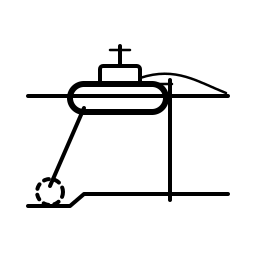
Hover the line to the choked turn, take the strain through the load cell, lift, fly the corridor to the landing, set the turn on the deck, release, return. The buffer battery soaks the load transients; the tank carries the hours. When fuel runs low, the machine recovers to the dock, refuels, and goes back on the line.
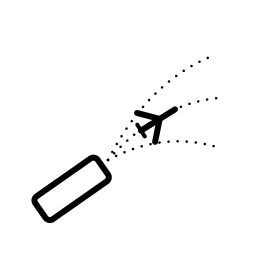
End of day: the machine lands at the dock, the tackle is stowed, and the cycle log — every turn, every mass, every release — goes to the operator's records. If anything had gone wrong mid-lift, the design answer is layered and blunt: jettison the load, autorotate, or ride the ballistic chute. Nobody was on board to bet on any of it.
The Heavy-Lift Logger flies at the top of the Movers block, above the CS-5xx work horses — and turns around on the line's own ground infrastructure.
Long-line log extraction and external-load handling — heli-logging's work with nobody in the seat.
Download PDF ↓The Movers block's baseline load carrier — the class the Logger flies above.
Download PDF ↓The CS-DOCK automated ground station — the Logger's baseline turnaround path is refuelling at the pad.
Download PDF ↓If you fly long-line, run a licence, or lose sleep over external-load hours, this is the conversation worth having — about the machine that flies the turn so nobody has to.