 CS-510 · Industrial
Seeder
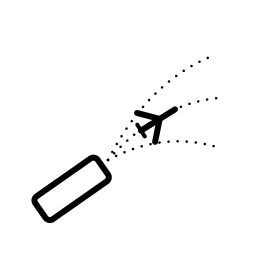
A pneumatic seed-pod launcher, retuned to gentleness. Pods down, evidence back.
Read the brochure →
Download PDF ↓
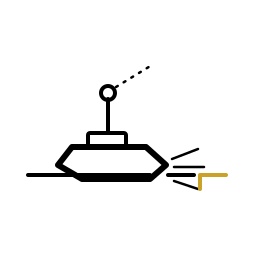 CS-520 · Industrial
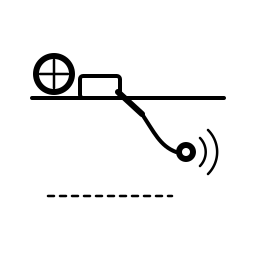
Skimmer
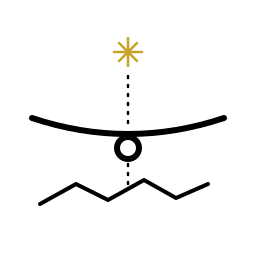
A small moulded surface craft — the information and marking layer of a spill response.
Read the brochure →
Download PDF ↓
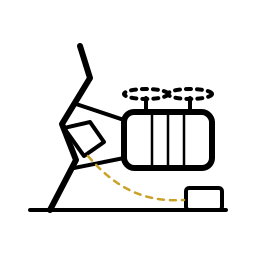 CS-530 · Industrial
Rock Scaler
A contact-tolerant aerial platform sets the hook. A ground-anchored winch does the pulling.
Read the brochure →
Download PDF ↓
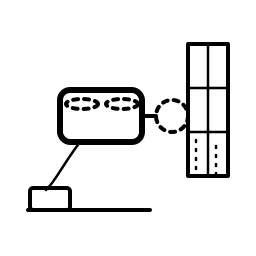 CS-540 · Industrial
Washer
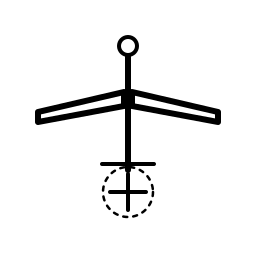
A caged, umbilical-fed washing platform. Water up the line, evidence back down.
Read the brochure →
Download PDF ↓
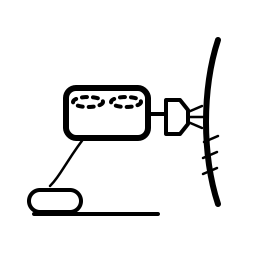 CS-550 · Industrial
Coater
An umbilical-fed applicator platform. The pressure stays on the ground; the machine flies the last few hundred millimetres.
Read the brochure →
Download PDF ↓
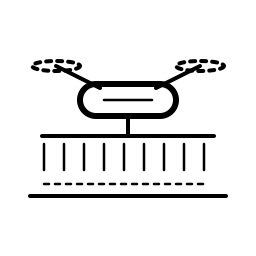 CS-560 · Industrial
Sprayer
Full-width boom, drift-reduction nozzles, a metered rate held across the pass. The broadcast tool for the uniform job.
Read the brochure →
Download PDF ↓
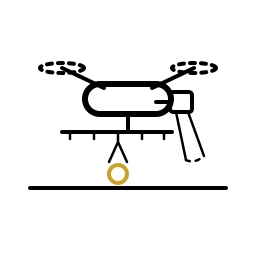 CS-561 · Industrial
Spot Sprayer
Machine vision finds the target; only that nozzle opens. Built to cut total product volume per acre.
Read the brochure →
Download PDF ↓
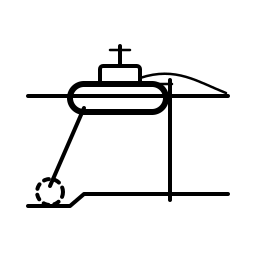 CS-570 · Industrial
Dredger
A trailerable uncrewed dredger for ponds, marinas, lagoons and channels.
Read the brochure →
Download PDF ↓
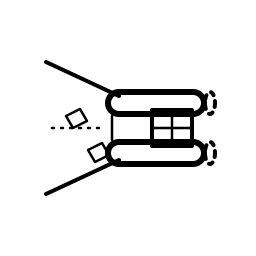 CS-580 · Industrial
Recovery
An uncrewed collection craft for the debris and spill material that floats.
Read the brochure →
Download PDF ↓
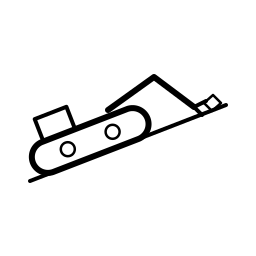 CS-590 · Industrial
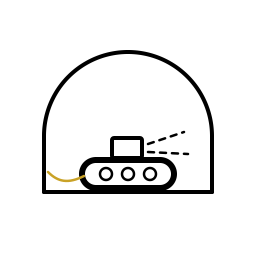
Enviro
A tracked, teleoperated manipulator platform for shoreline and land cleanup — reach, load and slope, enforced as one envelope.
Read the brochure →
Download PDF ↓
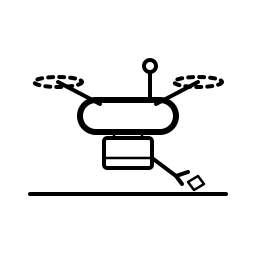 CS-630 · Industrial
Litter Collector
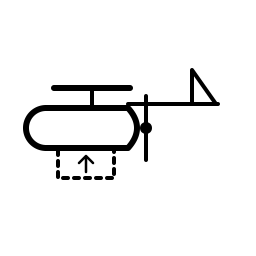
An uncrewed multirotor built to find litter, take only litter, and prove it did.
Read the brochure →
Download PDF ↓
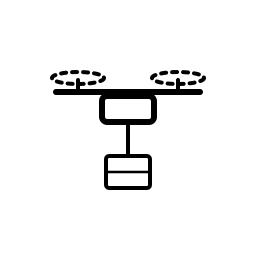 CS-600 · Industrial
Cargo Mover
An uncrewed VTOL cargo family — four sizes of the same machine, from toolbox to bulk lift.
Read the brochure →
Download PDF ↓
 CS-610 · Industrial
Personnel Mover
A crew-carrying VTOL work machine. Two tiers — PM-8 single-seat, PM-12 two-seat.
Read the brochure →
Download PDF ↓
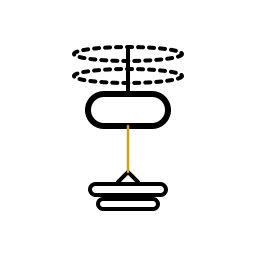 CS-620 · Industrial
Heavy-Lift Logger
An uncrewed coaxial hybrid rotorcraft for long-line log extraction — turn after turn, hour after hour.
Read the brochure →
Download PDF ↓
 CS-700 · Industrial
Self-Charging Dock
A docking and replenishment station that lets a working fleet return, recharge and redeploy without a hand touching it.
Read the brochure →
Download PDF ↓
 CS-710 · Industrial
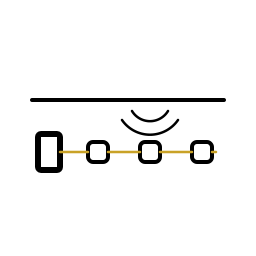
Relay Chain
A deployable chain of relay nodes — command, telemetry and position augmentation for civil fleets working past the edge of the network.
Read the brochure →
Download PDF ↓
 CS-C001 · Industrial
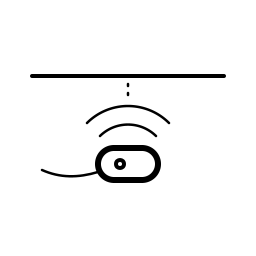
Fibre Spool Line
Guidance-fibre consumable cassettes — a physical tether option, alongside or instead of radio.
Read the brochure →
Download PDF ↓